
Category: Apple Macs

The 5-Minute PBX: PIAF Virtual Machine for VirtualBox (Windows, Mac, or Linux)

For most of us, today marks the last time we’ll ever see the day, month, and year line up on the calendar in perfect harmony so Happy 12-12-12 to everyone. It’ll be 88+ years before it happens again. And the Mayans believe the world will be ending in 9 more days so there may be no need to worry about the 88 years anyway. Whatever happens, it seemed like an appropriate time to take stock of how we’re doing in the development of the Perfect PBX™. Such an assessment, of course, is in the eyes of the beholder. From our perspective, in addition to being feature-rich, it has to have three components: ease of installation, ease of use, and flexibility. The first two are self-explanatory but flexibility needs some explanation. Flexibility to us means a feature set that’s appealing not only to those just beginning the journey but also to those of us that need to make frequent changes and additions to the platform to keep it current or make it better. After all, that’s what open source is all about.

The real beauty of PBX in a Flash has not been that someone with sufficient expertise couldn’t assemble something just as good or even better. Watch the AstriCon presentations from this year if you have any doubts. The beauty of PIAF is it puts this technology down where the goats can get it. It provides a toolset that encourages further development by simplifying the learning curve for a broad cross-section of the VoIP community while not compromising functionality or flexibility. The source code for the major components is included in the build so you can customize and recompile Asterisk or load a new version of Asterisk or any additional Linux app in minutes without losing your existing setup.

As many of you know, we have literally hundreds of gurus on the PIAF Forum. That doesn’t mean any particular person or group knows everything. It’s merely a designation that a particular individual is an expert at something. The collective wisdom of the group is what makes PBX in a Flash as a project better because we’ve put in place a platform that experts from many different disciplines can build upon without needing to learn everything about everything. Simply stated, you can be a terrific chef without knowing how to build a stove!

Turning to Asterisk® 11 and FreePBX® 2.11, from everything we’re seeing, these new releases are shaping up to be a remarkable step forward both in terms of toolset and in the new mindset of the development community. That’s a good thing. For our part, we’ve wanted to get our latest preview release of PBX in a Flash with CentOS 6.3, Asterisk 11 and the new FreePBX 2.11 beta into as many hands as possible keeping in mind the objectives we outlined above.

The Ultimate VoIP Appliance: PIAF Virtual Machine for VirtualBox

Today brings us to a new plateau in the virtual machine development era. Thanks to the masterful work of Tom King on PBX in a Flash 2.0.6.3.1, we’re pleased to introduce a new product that can be installed in under 5 minutes and will run on any Windows PC, Mac, or Linux machine as well as Solaris. And, unlike the dedicated machine platforms and OpenVZ compromises of years past, today’s PIAF Virtual Machine gives you everything a bare metal install from source code would have provided. Most importantly, the components are truly portable. They can be copied to a 4GB flash drive1 for the price of a good hamburger and installed from there onto any type of machine that happens to be in front of you. Five minutes later, you have a fully functional Asterisk server with FreePBX and exactly the same feature set and source code that you would have had doing a bare metal PIAF install to a dedicated server. And we’ve built both a production-ready PIAF-Purple VM with Asterisk 1.8 and FreePBX 2.10 as well as a Pioneer edition PIAF-Green VM with Asterisk 11 and FreePBX 2.11 beta. The choice is yours. No Internet access required to perform the install. Sound too good to be true? Keep reading or, better yet, try the PIAF appliance for yourself. The install process is simple:

  1. Download and install VirtualBox onto a Desktop Machine of your choice
  2. Download and double-click on the PIAF Virtual Machine to import it into VirtualBox
  3. Select the PIAF Virtual Machine in VirtualBox Manager Window and click the Start button

Introducing Oracle VM VirtualBox

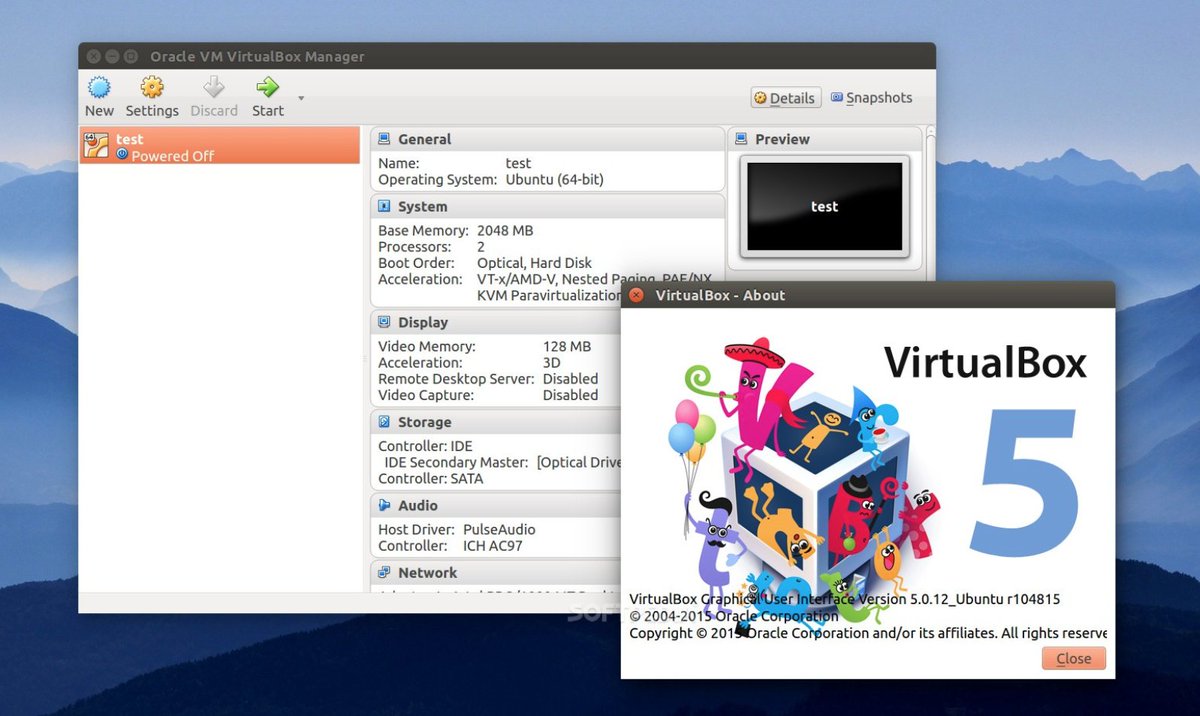
We’re late to the party, but Virtual Box®, Oracle’s virtual machine platform inherited from Sun, is really something. It’s not only free, but it’s pure GPL2 code. VirtualBox gives you a virtual machine platform that runs on top of any desktop operating system. In terms of limitations, we haven’t found any. We even tested this on an Atom-based Windows 7 machine with 2GB of RAM, and it worked without a hiccup. So step #1 is to download one or more of the VirtualBox installers from VirtualBox.org or Oracle.com. As mentioned, our recommendation is to put all of the 100MB installers on a 4GB thumb drive. Then you’ll have everything in one place whenever and wherever you happen to need it. Once you’ve downloaded the software, simply install it onto your favorite desktop machine. Accept all of the default settings, and you’ll be good to go. For more details, here’s a link to the Oracle VM VirtualBox User Manual.

Introducing the PIAF Virtual Machine

We’ll walk you through installing the PIAF-Green Virtual Machine. It’s basically the same procedure with PIAF-Purple except you get to skip the reassembly step since the PIAF-Purple.ova image is only 1.3GB.

The PIAF-Green Virtual Machine tips the scales at over 2GB. Because of the 2GB file size limit on many systems, we’ve chosen to split this download into two pieces. You need both of them. Just download them onto any flavor desktop from SourceForge. Once you’ve downloaded the two files, we need to reassemble them into a single file known as an Open Virtualization Appliance (.ova). Then verify the checksums for the reassembled file to be sure everything is in its proper place. Finally, we’ll double-click on the .ova file which will initiate the import process into VirtualBox.

So let’s begin by downloading the two halves of PIAF-Green from SourceForge: PIAFGREENaa and PIAFGREENab. If you’d prefer production-ready code, just download PIAF-Purple.ova and skip the reassembly step. There’s also a new surprise offering that’s covered in the comments to this article. :-)

The reassembly procedure depends upon your desktop operating system. For Windows PCs, you’ll need to drop down to the Command Prompt, change to the directory in which you downloaded the two files, and type the following command:
 
copy /b PIAFGREENaa + PIAFGREENab PIAF-Green.ova

To check the MD5/SHA1 checksums in Windows, download and run Microsoft’s File Checksum Integrity Verifier.

For Mac or Linux desktops, open a Terminal window, change to the directory in which you downloaded the two files, and type the following commands:
 
cat PIAFGREENa{a..b} > PIAF-Green.ova
md5 PIAF-Green.ova (use md5sum for Linux)
openssl sha1 PIAF-Green.ova

The correct MD5 checksum for PIAF-Green ( PIAF-Green.ova) is a86a018466c7045372e51100cddd42ea. For PIAF-Purple.ova, it’s 664b1afe75c3b1877029531b0fe28063. The correct SHA1 checksum for PIAF-Green is d883c5e137ac19ecb45c1e6f127180b78a9cd0af. For PIAF-Purple, it’s 15f94352745ca989fd9939d9a8ee8b765fc8388c. If you have a match, proceed. Otherwise, rinse and repeat.

Importing the PIAF Virtual Machine into VirtualBox

You only perform the import step one time. Once imported into VirtualBox, PBX in a Flash is ready to use. There’s no further installation required, just like an OpenVZ template… only better. Double-click on the .ova file you downloaded to begin the procedure and load VirtualBox. When prompted, be sure to check the Reinitialize the Mac address of all network cards box and then click the Import button. Once the import is finished, you’ll see a new PIAF virtual machine in your VM List on the VirtualBox Manager Window. Regardless of flavor, you’ll need to make a couple of one-time adjustments to the PIAF Virtual Machine configuration to account for differences in sound and network cards on different host machines.

Click on the PIAF Virtual Machine in the VM List. Then click Settings -> Audio and check the Enable Audio option and choose your sound card. Save your setup by clicking the OK button. Next click Settings -> Network. For Adapter 1, check the Enable Network Adapter option. From the Attached to pull-down menu, choose Bridged Adapter. Then select your network card from the Name list. Then click OK. Finally, click Settings -> System, uncheck Hardware clock in UTC time, and click OK. That’s all the configuration that is necessary for your PIAF Virtual Machine. The rest is automagic.

Running the PIAF Virtual Machine in VirtualBox

Once you’ve imported and configured the PIAF Virtual Machine, you’re ready to go. Highlight PIAF Virtual Machine in the VM List on the VirtualBox Manager Window and click the Start button. The PIAF boot procedure with CentOS 6.3 will begin just as if you had installed PBX in a Flash on a standalone machine. You’ll see a couple of dialogue boxes pop up that explain the keystrokes to move back and forth between your host operating system desktop and your PIAF VM.

Here’s what you need to know. To work in the PIAF Virtual Machine, just left-click your mouse while it is positioned inside the VM window. To return to your host operating system desktop, press the right Option key on Windows machines or the left Command key on any Mac. For other operating systems, read the dialogue boxes for instructions on moving around. Always shut down PIAF gracefully! Click in the VM window with your mouse, log in as root, and type: shutdown -h now.

Run the PIAF Virtual Machine behind a hardware-based firewall with no Internet port exposure!

To begin, position your mouse over the VM window and left-click. Once the PIAF VM has booted, log in as root with password as the password. Change your root password immediately by typing passwd at the command prompt. Now set up a secure maint password for FreePBX as well. Type passwd-master. If you’re not in the Eastern U.S. time zone, then you’ll want to adjust your timezone setting so that reminders and other time-sensitive events happen at the correct time. While logged into your server as root, issue these commands to download and run the timezone-setup script:

cd /root
wget http://pbxinaflash.com/timezone-setup.tar.gz
tar zxvf timezone-setup.tar.gz
./timezone-setup

Next, use a browser to log into your PIAF server by pointing to the IP address of the PIAF VM that’s displayed in the status window of the CLI. Click on the User button to display the Admin choices in the main PIAF Menu. Click on the FreePBX option to load the FreePBX GUI. You will be prompted for an Apache username and password. For the username, use maint. For the password, use whatever password you set up with passwd-master.

Now read the latest PIAF Quick Start Guide and begin your VoIP adventure. Then you’ll want to do some reading on VirtualBox. We’ve barely scratched the surface. Setting up Headless VMs that run in the background on any server is a breeze. From the command line, here’s an article to get you started. But you also can start Headless VMs from within the GUI by highlighting the VM and clicking Shift->Start. Always shut down VMs gracefully: Close->ACPI Shutdown. You’ll find more great tips at virtualbox.org and GitHub.

One of the real beauties of VirtualBox is you don’t have to use a GUI at all. The entire process can be driven from the command line. Other than on a Mac, here is the procedure to import, configure, and run PIAF-Purple Virtual Machine:
 
VBoxManage import PIAF-Purple.ova
VBoxManage modifyvm "PIAF-Purple" --nic1 nat
VBoxManage modifyvm "PIAF-Purple" --acpi on --nic1 bridged
VBoxHeadless --startvm "PIAF-Purple" &
# Wait 1 minute for PIAF-Purple to load. Then decipher IP address like this:
VBoxManage guestproperty get "PIAF-Purple" /VirtualBox/GuestInfo/Net/0/V4/IP
# Now you can use SSH to login to PIAF-Purple at the displayed IP address
# Shutdown the PIAF-Purple Virtual Machine with the following command:
VBoxManage controlvm "PIAF-Purple" acpipowerbutton

On a Mac, everything works the same way except for deciphering the IP address. Download our findip script for that.

Enjoy!

Originally published: Wednesday, December 12, 2012


Need help with Asterisk? Visit the PBX in a Flash Forum.


New Vitelity Special. Vitelity has generously offered a new discount for PBX in a Flash users. You now can get an almost half-price DID from our special Vitelity sign-up link. If you’re seeking the best flexibility in choosing an area code and phone number plus the lowest entry level pricing plus high quality calls, then Vitelity is the hands-down winner. Vitelity provides Tier A DID inbound service in over 3,000 rate centers throughout the US and Canada. And, when you use our special link to sign up, the Nerd Vittles and PBX in a Flash projects get a few shekels down the road while you get an incredible signup deal as well. The going rate for Vitelity’s DID service is $7.95 a month which includes up to 4,000 incoming minutes on two simultaneous channels with terminations priced at 1.45¢ per minute. Not any more! For PBX in a Flash users, here’s a deal you can’t (and shouldn’t) refuse! Sign up now, and you can purchase a Tier A DID with unlimited incoming calls for just $3.99 a month. To check availability of local numbers and tiers of service from Vitelity, click here. Do not use this link to order your DIDs, or you won’t get the special pricing! Vitelity’s rate is just 1.44¢ per minute for outbound calls in the U.S. There is a $35 prepay when you sign up. This covers future usage and any balance is fully refundable if you decide to discontinue service with Vitelity.


Some Recent Nerd Vittles Articles of Interest…

  1. Many of our purchase links refer users to Amazon when we find their prices are competitive for the recommended products. Nerd Vittles receives a small referral fee from Amazon to help cover the costs of our blog. We never recommend particular products solely to generate Amazon commissions. However, when pricing is comparable or availability is favorable, we support Amazon because Amazon supports us. []

11/11/11: To Celebrate Nerd New Year’s, Please Welcome…

Nerd Vittles Daily Dump

Just click on the image above to visit the site. Content is updated at least twice daily. As always, we welcome your content suggestions. Enjoy!

Originally published: Friday, November 11, 2011


Great News! Google Plus is available to everyone. Sign up here and circle us. Click these links to view the Asterisk feed or PBX in a Flash feed on Google+.


Need help with Asterisk? Visit the PBX in a Flash Forum.
Or Try the New, Free PBX in a Flash Conference Bridge.


whos.amung.us If you’re wondering what your fellow man is reading on Nerd Vittles these days, wonder no more. Visit our new whos.amung.us statistical web site and check out what’s happening. It’s a terrific resource both for us and for you.


New Vitelity Special. Vitelity has generously offered a new discount for PBX in a Flash users. You now can get an almost half-price DID and 60 free minutes from our special Vitelity sign-up link. If you’re seeking the best flexibility in choosing an area code and phone number plus the lowest entry level pricing plus high quality calls, then Vitelity is the hands-down winner. Vitelity provides Tier A DID inbound service in over 3,000 rate centers throughout the US and Canada. And, when you use our special link to sign up, the Nerd Vittles and PBX in a Flash projects get a few shekels down the road while you get an incredible signup deal as well. The going rate for Vitelity’s DID service is $7.95 a month which includes up to 4,000 incoming minutes on two simultaneous channels with terminations priced at 1.45¢ per minute. Not any more! For PBX in a Flash users, here’s a deal you can’t (and shouldn’t) refuse! Sign up now, and you can purchase a Tier A DID with unlimited incoming calls for just $3.99 a month and you get a free hour of outbound calling to test out their call quality. To check availability of local numbers and tiers of service from Vitelity, click here. Do not use this link to order your DIDs, or you won’t get the special pricing! After the free hour of outbound calling, Vitelity’s rate is just 1.44¢ per minute for outbound calls in the U.S. There is a $35 prepay when you sign up. This covers future usage and any balance is fully refundable if you decide to discontinue service with Vitelity.


Some Recent Nerd Vittles Articles of Interest…

Android 3 Deal of the Year: Acer Tab for Under $300

We’ve never done back-to-back reviews of similar devices, but this week’s Target ad changes all of that. As you might expect, Acer has covered all of the bases with their entry into the dual-core Android 3 tablet sweepstakes. You may recall that we weren’t huge fans of the Motorola Xoom which promised a lot and delivered a boatload of vaporware. The Acer Iconia Tab A500 is not the Xoom. You not only get a microSD slot and Flash that actually work, but Acer has thrown in an HDMI port that can output 1080p video as well as a USB port that lets you connect your favorite USB devices including external hard disks. It performs this magic with an 8-10 hour battery life. And this week (only at Target) you can pick up this WiFi-only device for half the cost of the Motorola Xoom. In fact, after the gift card, it’s only a dollar more than the single-core Vizio Tablet that we reviewed last week.

Update: See the comments for equivalent deals just announced at NewEgg and CompUSA.

It’s difficult to describe the feel of the Acer Tab. Suffice it to say, it’s dimensions coupled with its sleek and sculpted design put it in the league with the iPad2 unlike the Xoom which felt chunky and clunky despite being an ounce lighter than the Acer.

As we mentioned last week, we don’t dive too deeply into the technical weeds in our reviews. If you want the technical assessment, check out this PC World review. What we prefer to evaluate is real-world usage of these devices. The Acer Tab has stunning performance. In addition to reading email and browsing the web, here’s the suite of applications which we think matter to most folks. We want to watch videos from YouTube and NetFlix. We want to stream music from Google Music and Spotify and read our Kindle books. We like to use Skype. And, yes, we also like Flash video support which works perfectly on the Acer tablet.

In addition to running Android 3, the Acer Tab boasts impressive hardware specs running a 1GHz Nvidia Tegra 250 dual-core processor with 1GB of RAM and 16GB of ROM. Add another 32GB easily with the microSD slot. The 10.1-inch tablet has a 1280-by-800 pixel display with a 16:10 aspect ratio that’s perfect for HD video content. We always prefer testing devices with real-world video content that we’ve shot so we can compare it to performance on other devices. Our Pawleys Island Parade video didn’t disappoint. It’s performance and color were as good or better on the Acer Tab than on Apple’s top-of-the-line 27″ iMac featuring a quad-core 2.93 GHz Core i7 processor with 8GB of RAM plus L2 and L3 cache. The same can be said with playback of complex Flash video. Netflix unfortunately is still a few weeks off although rooted Acer devices reportedly run it just fine.

On the music front, it doesn’t get much better than the Acer Tab. With Google Music or Spotify, the music world is your oyster. And the silver lining is that the Acer Tab is the one and only device that includes Dolby Mobile audio. Once you adjust the equalizer to match your taste in music, you’ll have sound quality to match that 20-pound boombox gathering dust in your basement.

In the communications department, Skype performed well although video calls are not yet supported. That’s unfortunate given the impressive specs on the Acer Tab’s two cameras. The Iconia Tab has a 5-megapixel rear-facing camera with flash in addition to a 2-megapixel front-facing camera for video conferencing. Finally, making and receiving free phone calls using either an Asterisk® server with CSipSimple or Google Voice using a $50 Obihai device and the free ObiON client for Android both worked great.

There’s only one word you’ll need to remember to take advantage of this Target deal: H-U-R-R-Y! This is a one-week only special, and Target offers no rainschecks. So call around until you find one. You won’t be sorry. And, as usual, Target offers a 90-day, no questions asked return policy which is second to none.

Google+ Invites Still Available. Need a Google+ invite? Drop us a note and include the word "Google+" and we’ll get one off to you. Come join the fun!

Our Favorite Android Apps. We’ve listed a few of our favorite apps below for those just getting started with Android. Enjoy!


Originally published: Tuesday, August 16, 2011


Need help with Asterisk? Visit the PBX in a Flash Forum.
Or Try the New, Free PBX in a Flash Conference Bridge.


whos.amung.us If you’re wondering what your fellow man is reading on Nerd Vittles these days, wonder no more. Visit our new whos.amung.us statistical web site and check out what’s happening. It’s a terrific resource both for us and for you.


New Vitelity Special. Vitelity has generously offered a new discount for PBX in a Flash users. You now can get an almost half-price DID and 60 free minutes from our special Vitelity sign-up link. If you’re seeking the best flexibility in choosing an area code and phone number plus the lowest entry level pricing plus high quality calls, then Vitelity is the hands-down winner. Vitelity provides Tier A DID inbound service in over 3,000 rate centers throughout the US and Canada. And, when you use our special link to sign up, the Nerd Vittles and PBX in a Flash projects get a few shekels down the road while you get an incredible signup deal as well. The going rate for Vitelity’s DID service is $7.95 a month which includes up to 4,000 incoming minutes on two simultaneous channels with terminations priced at 1.45¢ per minute. Not any more! For PBX in a Flash users, here’s a deal you can’t (and shouldn’t) refuse! Sign up now, and you can purchase a Tier A DID with unlimited incoming calls for just $3.99 a month and you get a free hour of outbound calling to test out their call quality. To check availability of local numbers and tiers of service from Vitelity, click here. Do not use this link to order your DIDs, or you won’t get the special pricing! After the free hour of outbound calling, Vitelity’s rate is just 1.44¢ per minute for outbound calls in the U.S. There is a $35 prepay when you sign up. This covers future usage and any balance is fully refundable if you decide to discontinue service with Vitelity.


Some Recent Nerd Vittles Articles of Interest…

Welcome to Frontier Days

One of my favorite vacations as a kid was spent enjoying Frontier Days in Cheyenne, Wyoming. If you’ve never been with your family, you need to add this to your Bucket List. It’s a week-long celebration that you’ll never forget. To commemorate this year’s event which is going on right now, we decided to celebrate by staging our own Frontier Days here at Nerd Vittles. It provides you an opportunity to join with us in kicking the tires of all the new stuff we’re working on this summer to write about in the fall. In the grand tradition of Cheyenne’s Frontier Days, expect a wild ride! If you’re a bit squeamish about knowing how sausage is made, today’s introduction to new projects may not be your cup of tea. For the pioneers, it’s Party Time! So let’s get started.

Introducing Asterisk 10. At the top of our list is the brand new Asterisk®, formerly known as Asterisk 1.10. You’ll want to read Kevin Fleming’s announcement of the name change, and then read Malcolm Davenport’s summarization of the new product. Here are a few excerpts:

A major focus of the Asterisk 10 development cycle was Asterisk’s support for media types. In versions of Asterisk 1.8 and prior, Asterisk supported a rather limited number of codecs due to some architectural limitations. Plumbing was ripped out, kitchens were remodeled, girders were swapped, and Asterisk 10 now has a media architecture that’s capable of handling both a nearly unlimited number of codecs as well as codecs with more complex parameters…

Asterisk 10 [also] provides basic video conferencing support. That’s right, if you and your friends have video-capable SIP devices, that all speak the same video codec and profile, you can create multi-party video conferences.

Asterisk 10 can also improve your faxing experience. Asterisk 1.4 is capable of T.38 pass-through, where one T.38 capable endpoint can send a fax directly to another T.38 capable endpoint – usually a couple of SIP peers. Asterisk 1.6.X and 1.8 are capable of T.38 termination, where Asterisk can read/write TIFF files from/to T.38 endpoints. Now, with Asterisk 10, transparency between non-T.38 and T.38 is possible.

Whenever there are major plumbing changes, there usually are some major surprises awaiting those of us that depend upon Asterisk to actually make calls. That’s where you come in. Tom King has quickly put together a new PBX in a Flash 1.7.5.6.3 ISO that includes PIAF-Red, aka the new Asterisk 10. We encourage you to try it on a non-production machine, and report any problems both to us (on the PIAF Forum) and to Digium® (in the Bug Tracker). Here’s a download link to get you started. Here’s the new Cepstral TTS installer.

Introducing Incredible PBX 2.0. Frontier Days wouldn’t be complete without a new version of Incredible PBX. In this beta release, we’ve reworked Google Voice support and added one of the most requested features, the ability to enter dial strings for trunks in outbound routes the old-fashioned way.

On the Google Voice front, we’ve replaced the hard-coded Google Voice code in Incredible PBX 1.8 with Marcus Brown’s new FreePBX® module. It not only makes Google Voice usage optional, but it also lets you add and remove multiple Google Voice trunks to your heart’s content. And the setup process takes less than a minute to enter your credentials.

Incredible PBX 2.0 also includes Andrew Nagy’s new Swiss Army Knife Module for FreePBX. This module adds some of the most requested features that currently are missing from FreePBX 2.8 and 2.9:

  • Export a CSV file of your Dial Patterns from Outbound Dial Plans
  • Use Textbox Dial Patterns for Outbound Routes
  • Modified Blacklist Module allowing any value, not just numbers
  • Coming Soon: reg-exp black/white list module

If you’d like to take Incredible PBX 2.0 for a spin, here’s a download link with instructions. Be aware that this version is NOT suitable for use on any system that is not also protected by a hardware-based firewall. For example, don’t use it on a hosted server such as RentPBX.com just yet. We use a different security model on hosted and cloud-based systems, and it is NOT included in this build. Finally, Incredible PBX 2.0 is not yet compatible with Asterisk 10 and PIAF-Red, but we’re working on it.

Introducing Google+. Unless you’ve been sleeping under a rock, you probably have heard that Google has a new little product of its own. In less than 3 weeks, Google+ has grown to over 20 million users, and it’s still by invitation only. You can read our writeup of it on Nerd Vittles. Suffice it to say, it is a game changer for those of us in the technology business. It’s an almost perfect tool for carrying on a problem-solving dialog, and we plan to make extensive use of it in coming months to support PBX in a Flash and Incredible PBX. Don’t be shy. We’ve got plenty of invites. All you have to do is drop us a note and include the word Google+ so we’ll know what you need. We’re turning requests around in less than a day. One final hint. Use your real name on Google Voice, or the Soup Nazi may remove your account. It’s become a bit of a brouhaha at the moment… as one might expect during Frontier Days.

Introducing OS X Lion. Apple has not been asleep at the wheel either. Their new operating system release is extraordinarily good but only available as an over-the-air update to an existing OS X 10.6.8 system. You can read our writeup of the gotchas for a quick and painless install. And, if you’re in the market for a new notebook, we can’t say enough good things about the new MacBook Air. It’s in a league of its own.

Introducing Google Chromebooks. Last but not least, we need to say a few words about the amazing new Chromebooks running Google’s Chrome OS. As with cellphones, Google is not making the hardware. So you have a choice of Samsung or Acer at the moment. The Samsung model starts at $429 for the WiFi only model. The comparable Acer machine is $80 cheaper. We opted for the Samsung WiFi machine which is well made, has an incredible battery life, and just works. For 95% of what we do, it’s a perfect device. There’s a short list of gotcha’s. First, you’ve got to have network connectivity since everything is cloud-based. Second, if your requirements include a lot of graphics manipulation and editing, this probably is not the machine for you quite yet. Finally, if movies (NetFlix) and music (Spotify) are must-have’s, you’d better wait a month or two until those products are available for the Chromebook. Google Music, which allows you to put your own music collection in the cloud, works fine today! There’s an add-on extension to Chrome for Google Voice. As of yesterday, it works flawlessly to make and receive calls. In summary, if your computing requirements primarily involve surfing the web, email, and SSH, then you’re going to be very happy with the Chromebook.

In our case, we’re trying to alternate our use between a Chromebook and the new MacBook Air. So far, we’ve been very satisfied with both. And the Chromebook is 1/4 the cost! Pioneers Forever! Enjoy!

Originally published: Tuesday, July 26, 2011


Need help with Asterisk? Visit the PBX in a Flash Forum.
Or Try the New, Free PBX in a Flash Conference Bridge.


whos.amung.us If you’re wondering what your fellow man is reading on Nerd Vittles these days, wonder no more. Visit our new whos.amung.us statistical web site and check out what’s happening. It’s a terrific resource both for us and for you.


New Vitelity Special. Vitelity has generously offered a new discount for PBX in a Flash users. You now can get an almost half-price DID and 60 free minutes from our special Vitelity sign-up link. If you’re seeking the best flexibility in choosing an area code and phone number plus the lowest entry level pricing plus high quality calls, then Vitelity is the hands-down winner. Vitelity provides Tier A DID inbound service in over 3,000 rate centers throughout the US and Canada. And, when you use our special link to sign up, the Nerd Vittles and PBX in a Flash projects get a few shekels down the road while you get an incredible signup deal as well. The going rate for Vitelity’s DID service is $7.95 a month which includes up to 4,000 incoming minutes on two simultaneous channels with terminations priced at 1.45¢ per minute. Not any more! For PBX in a Flash users, here’s a deal you can’t (and shouldn’t) refuse! Sign up now, and you can purchase a Tier A DID with unlimited incoming calls for just $3.99 a month and you get a free hour of outbound calling to test out their call quality. To check availability of local numbers and tiers of service from Vitelity, click here. Do not use this link to order your DIDs, or you won’t get the special pricing! After the free hour of outbound calling, Vitelity’s rate is just 1.44¢ per minute for outbound calls in the U.S. There is a $35 prepay when you sign up. This covers future usage and any balance is fully refundable if you decide to discontinue service with Vitelity.


Some Recent Nerd Vittles Articles of Interest…

Installing OS X Lion: The Short List of Gotcha’s

It’s been a wild ride for the past 24 hours since Apple released OS X Lion. For those of you contemplating the move, here’s the short answer: Just Do It… after you make a backup.

A lot has changed and much has improved. On the pricing front, it’s one of the best bargains available at $29.99. That’s the price to load it on all your Macs, not just one. You’ll need to get a current version of Snow Leopard running on your existing Mac before you can install Lion because you need access to the Mac App Store for this download-only software. For those still using a PowerPC-based Mac, sorry. And say goodnight to Rosetta-based apps as well. The road ends at Snow Leopard for you. For everyone else, it’s a No Brainer!

There are a few things you need to know before you begin the install. First, you’ll want to make sure that you don’t have any PowerPC-only apps that you desperately need because those are all toast once you move to Lion. Of course it’s been 6 years since Apple began the transition to Intel from the PowerPC so this shouldn’t be overly traumatic for most folks. The major apps that won’t work include Adobe Creative Suite (CS2 and earlier), AppleWorks, FileMaker Pro (version 8 and earlier), MacroMedia Studio and Freehand, Microsoft Office (2004 and X versions), Quicken (almost everything… lazy bastards!), and some older games. You can check for compatibility by selecting each app in your Applications folder and choosing Get Info. In the Kind field, if it says Universal or Intel, you’re O.K. If it says PowerPC, you’re S.O.L.

The second cautionary note concerns the Migration Assistant. This is an Apple utility that lets you migrate your data from one Mac to another. If you plan to transfer your data from another Mac to the new Mac on which you are installing OS X Lion, then you first must get the other Mac updated to Mac OS X 10.6.8. Otherwise, you cannot migrate the data as part of the Lion install. You’ll also need to install the updated Migration Assistant on this other Mac running Snow Leopard 10.6.8. Here’s the link to download the new Migration Assistant from Apple.

The final gotcha you need to be aware of is that the OS X Lion installer self-destructs once the install is complete. If you want to burn a copy of OS X Lion to either a DVD or an 8GB USB Thumb Drive, you must do so before you kick off the actual install by clicking on the Continue prompt on your Desktop. Once you purchase OS X Lion, a copy of the installer will be downloaded into your Applications folder. It’s called Install Mac OS X Lion.app. The links above will tell you what to do next. Or you can wait until August and Apple will sell you a Lion Thumb Drive for $69. :roll:

To play it safe, cancel the install after making your DVD or thumb drive. Then reboot while holding down the Option key and choose the DVD or USB installer you just made to perform the install. In this way, you’ll know you have a good installer to use with your other Macs. Then you can preserve it for posterity. At this point, the original installer still will be available in your Applications. But, be aware, it still will be deleted at the end of the install even if you’re using a DVD or thumb drive. So rename it if you want to preserve it.

Where to Go Next. The premiere platform for getting all of the latest and greatest tips on Lion (and almost everything else) is Google’s new Google+. We’d love to help you get started. Read our Google Plus article for some great tips.

Want an invite? Just drop us a note and include the word Google in your message. We’ll get one out to you promptly. Once you’re signed up, be sure to circle us for the latest tips and tricks.

Originally published: Thursday, July 21, 2011


Need help with Asterisk? Visit the PBX in a Flash Forum.
Or Try the New, Free PBX in a Flash Conference Bridge.


whos.amung.us If you’re wondering what your fellow man is reading on Nerd Vittles these days, wonder no more. Visit our new whos.amung.us statistical web site and check out what’s happening. It’s a terrific resource both for us and for you.


New Vitelity Special. Vitelity has generously offered a new discount for PBX in a Flash users. You now can get an almost half-price DID and 60 free minutes from our special Vitelity sign-up link. If you’re seeking the best flexibility in choosing an area code and phone number plus the lowest entry level pricing plus high quality calls, then Vitelity is the hands-down winner. Vitelity provides Tier A DID inbound service in over 3,000 rate centers throughout the US and Canada. And, when you use our special link to sign up, the Nerd Vittles and PBX in a Flash projects get a few shekels down the road while you get an incredible signup deal as well. The going rate for Vitelity’s DID service is $7.95 a month which includes up to 4,000 incoming minutes on two simultaneous channels with terminations priced at 1.45¢ per minute. Not any more! For PBX in a Flash users, here’s a deal you can’t (and shouldn’t) refuse! Sign up now, and you can purchase a Tier A DID with unlimited incoming calls for just $3.99 a month and you get a free hour of outbound calling to test out their call quality. To check availability of local numbers and tiers of service from Vitelity, click here. Do not use this link to order your DIDs, or you won’t get the special pricing! After the free hour of outbound calling, Vitelity’s rate is just 1.44¢ per minute for outbound calls in the U.S. There is a $35 prepay when you sign up. This covers future usage and any balance is fully refundable if you decide to discontinue service with Vitelity.


Some Recent Nerd Vittles Articles of Interest…

Incredible PBX: Adding Google Calendars with Asterisk 1.8

One of the exciting new features in Asterisk 1.8 is external calendar integration including iCal, caldav, Microsoft Exchange, and ews. Hats off to Terry Wilson at Digium® for his great work on the calendaring API. Unfortunately, there hasn’t been much written about integrating the calendars into FreePBX®-based Asterisk® systems… until now. Because we’re all about free, our focus today will be Google Calendar integration, but we’ll provide you some links to get any of the other calendar types integrated into PBX in a Flash and Incredible PBX if that’s what floats your boat. In addition to being free, Google Calendar is one of the best calendaring apps on the planet. Its beauty lies in the incredible flexibility it provides for group scheduling and the sharing and transparent integration of dozens of calendars (both public and private) not to mention real-time updating with your favorite Android smartphones. Apple does much the same thing with iCal on the Mac and iPhone… for an annual fee.

The rainbow of colors you see in the left column of the screenshot above each represent a different calendar. All of the calendar entries from all of these calendars are integrated into the single calendar display on the right with a simple color scheme to identify where each calendar entry originated. As mentioned, these calendars can not only be from your friends and business associates, they also can be publicly available, read-only calendars for subject matter such as holidays, schedules of your favorite sports teams and rock bands, school calendars, etc. Take a look at iCalWorld to get a quick handle on what’s available. See also this Google resource.

The one bit of advice we would provide in setting up Google Calendar is don’t put all your eggs in one basket. Create separate calendars for different individuals and for different types of events. And don’t mix business with personal. Also keep internal business events separate from those that you might want to share with customers. Down the road, this facilitates sharing just the information of importance to different groups of friends and business associates. Bottom Line: Spend a little time thinking about organization of your calendars. It will pay off handsomely down the road.

Once you integrate Google Calendar into Incredible PBX, you can use it to alert you to upcoming appointments, to schedule and activate conference calls, and even to log the date, time, length, and recipient of all your outbound and/or incoming phone calls.

For today, we’ll get the software installed and functioning. And we’ll help you set up a simple reminder system based upon appointment entries in your Google Calendar. We’ll also give you some good reference materials so that you can experiment a bit on your own. In coming weeks, we’ll build a time slips system to keep track of all your phone calls.

Prerequisites. As mentioned, you’ll need a Gmail account as well as Asterisk 1.8 and PIAF-Purple with Incredible PBX 1.8 to follow along in today’s tutorial. All of the pieces are optional except for Asterisk 1.8 and a fairly current version of FreePBX, but we’ll leave that exercise for the pioneers. The script is licensed as GPL code so knock yourself out.

The Gotchas. Nothing is ever easy, is it? There always are a few surprises to worry about. Here’s the current short list for Asterisk Calendaring. When you schedule a meeting or appointment with Google Calendar, there is an option to set an alert to remind you of the meeting at any time you like on a per appointment basis. So, if you have a meeting 50 miles from home, you could set the alert for 90 minutes in advance while a meeting next door could be set with a 5 minute alert. All of that works fine in Google Calendar. Unfortunately, in Asterisk 1.8.4, there’s a math bug that subtracts the hour differential between your time zone and Greenwich Mean Time (GMT) from these alert times. If you happen to live in the GMT time zone, there’s no bug. However, those living on the East Coast of the U.S. will find their reminder calls arriving four hours too early. If you set an alert for 60 minutes before a scheduled meeting, Asterisk will call you 5 hours in advance. For our West Coast friends, it’s an 8 hour bug. Fortunately, the Asterisk Calendaring config file provides an option to override these alerts with a reminder call at a fixed number of minutes before each appointment. While it lacks the individual appointment flexibility to schedule alerts of different durations, it does work. So, for the time being, we’ll be using that.

Asterisk Calendar alerts also were supposed to be triggered only for events in which your Status has been set to Busy. A typical example would be a medical appointment. Instead, the alerts are generated for all calendar entries. So, if you’ve got 12 children and you’ve set all-day calendar entries to remind you of their birthdays each year, be forewarned that using your default Google Calendar will trigger a friendly reminder call at 11:50 p.m. on the night before each of your kids’ birthdays. Unless you and your spouse are both Night Owls, this might lead to some "WAF issues" if you get our drift. The workaround that we’ll implement today is to create a secondary appointments calendar and reserve it just to schedule meetings and appointments for which you wish to receive reminder calls at 10 minutes before each event. You can change the notification time to any fixed number of minutes desired. As we mentioned, one nice feature of Google Calendar is that entries on secondary calendars will automatically display on your main calendar. Just be sure to schedule the appointments on the correct calendar (we’ll show you how) if you want a reminder call.

Setting Up a Google Appointments Calendar. Before we get Asterisk configured for calendaring, let’s first set up your secondary Google appointments calendar. Log into the Gmail account that you either already use or will begin using for scheduling Calendar entries. Just click on the Calendar tab at the top of the screen and set up your default calendar if it doesn’t already exist. Once it’s set up, there will be a calendar list in the left margin under My Calendars. Just below your existing Calendar(s), there will be a Tasks entry, and below that will be an Add link to add a new calendar. Click on Add and fill in the main pieces of information as shown below. Use appointments for the name of the calendar and make sure you set the correct Time Zone for your hometown. Then save your entries by clicking the Create Calendar button.

Once you have created your new appointments calendar, we need one other piece of information to use it with Asterisk. Under My Calendars in the left margin, click on the down arrow beside appointments and choose Calendar Settings. That will bring up a form that looks like this:

The next to the last section of the form is entitled Calendar Address. You’ll see an entry to the right of the section title called Calender ID with a long alphanumeric string followed by @group.calendar.google.com. Write down the Calendar ID or copy it to clipboard. Don’t include @group.calendar.google.com! You can ignore the statement that the link is inoperative unless you make your calendar public. It actually works just fine with your Google credentials which we’ll configure as part of the Asterisk setup below.

Configuring Asterisk for Google Calendar Integration. PBX in a Flash and Incredible PBX come with most of the components you’ll need to get calendaring to work. However, there are a few missing pieces at the moment. These will require that Asterisk be recompiled, and we’ve built a little script to do all of it for you. Just log into your server as root and issue the following commands:

cd /root
wget http://incrediblepbx.com/setup-cal.sh
chmod +x setup-cal.sh
./setup-cal.sh

After you enter your Google credentials and Calendar ID, the script will temporarily shut down Asterisk, download the missing components for calendaring, recompile Asterisk, and customize the calendar setup with your Google credentials. Then the script will complete the setup and restart Asterisk. The whole process takes about 5 to 10 minutes.

Asterisk Calendar Configuration. Here are the pieces in the default Google Calendar config file that will be replaced with your personal settings:

[GoogleCalendar]
type = caldav
;url = https://www.google.com/calendar/dav/username@gmail.com/events/
url = https://www.google.com/calendar/dav/CalendarID@group.calendar.google.com/events/
user = username@gmail.com
secret = userpassword
refresh = 10
timeframe = 120
;
autoreminder = 10
;
channel = local/8005551212@from-internal
context = from-internal
extension = 225
waittime = 45

If you should ever need to make changes to these settings again, you’ll find the entries with your Google credentials at the end of the calendar.conf config file in /etc/asterisk. Remember to restart Asterisk after making any changes. The commented out URL entry is the one you’d use to access your main Google Calendar instead of the secondary appointments calendar we created above. If the GMT bug is ever fixed, this would be a step forward.

Extension 225 (C-A-L) is the extension that will be called to actually play back the reminder information. You’ll find this block of code at the top of extensions_custom.conf in the [from-internal-custom] context. You can make any adjustments you’d like. We simply set this up to give you a template to follow. As configured, the reminder will read you a summary, the starting time, location, and any description associated with each calendar entry. If you have a Cepstral voice in addition to Flite, just change the Flite entries to Swift. Then restart Asterisk: amportal restart.

Asterisk Calendar Test Drive. Asterisk keeps track of your scheduled events by checking your Google Calendar every 10 minutes. We recommend configuring reminders for calls 10 minutes before any scheduled event in the appointments calendar. What this means is you probably should never schedule an event expecting to get a reminder call if the event is less than about a half hour in the future. If you use a setting for the autoreminder time other than 10 minutes, this will obviously be different for you.

So let’s schedule an appointment for an hour from the current time. Click on the Calendar tab in Gmail. And then click on the down arrow beside the appointments calendar in the left column. Choose Create Event on this Calendar. You’ll get a form that looks like this. Click Save to store your new Calendar entry. Then go have a beer and wait for your call.

Where To Go From Here. We’ve just scratched the surface of what you can do with Asterisk 1.8 using Google Calendars. We recommend you now review the chapter in the new Asterisk Definitive Guide book that covers calendaring in some detail. It will give you a good handle on what’s possible. For a more technical discussion, take a look at this contribution from one of the PIAF Forum regulars. Amazing stuff! There’s also a good article in VoIP Today that’s worth a careful read. Be aware that, if you recompile Asterisk to add support for Microsoft Exchange, you probably will break the Google Calendar connection that we’ve outlined today. At least, we never have been able to get the two to coexist. If you have better luck, please post your results. The reason for the problem is that the Exchange connector depends upon neon-0.29 which is not yet part of CentOS 5.x. We’ll keep you posted on our progress. Enjoy!

Originally published: Monday, May 23, 2011


Changes in PBX in a Flash Distribution. In light of the events outlined in our recent Nerd Vittles article and the issues with Asterisk 1.8.4, the PIAF Dev Team has made some changes in our distribution methodology. As many of you know, PBX in a Flash is the only distribution that compiles Asterisk from source code during the install. This has provided us enormous flexibility to distribute new releases with the latest Asterisk code. Unfortunately, Asterisk 1.8 is still a work in progress to put it charitably. We also feel some responsibility to insulate our users from show-stopping Asterisk releases. Going forward, the plan is to reserve the PIAF-Purple default install for the most stable version of Asterisk 1.8. As of June 1, Asterisk 1.8.4.1 is the new PIAF-Purple default install. Other versions of Asterisk 1.8 (newer and older) will be available through a new configuration utility which now is incorporated into the PIAF 1.7.5.6.2 ISO.

Here’s how it works. Begin the install of a new PIAF system in the usual way by booting from your USB flash drive and pressing Enter to load the most current version of CentOS 5.6. When the CentOS install finishes, your system will reboot. Accept the license agreement, and choose the PIAF-Purple option to load the latest stable version of Asterisk 1.8. Or exit to the Linux CLI if you want a different version. Log into CentOS as root. Then issue a command like this: piafdl -p beta_1841 (loads Asterisk 1.8.4.1), piafdl -p 184 (loads Asterisk 1.8.4), piafdl -p 1833 (loads Asterisk 1.8.3.3), or piafdl -p 1832 (loads Asterisk 1.8.3.2). If there should ever be an outage on one of the PBX in a Flash mirrors, you can optionally choose a different mirror for the payload download by adding piafdl -c for the .com site, piafdl -d for the .org site, or piafdl -e for the .net site. Then add the payload switch, e.g. piafdl -c -p beta_1841.

Bottom Line: If you use the piafdl utility to choose a particular version of Asterisk 1.8, you are making a conscious decision to accept the consequences of your particular choice. We would have preferred implementation of a testing methodology at Digium before distribution of new Asterisk releases; however, that doesn’t appear to be in the cards. So, as new Asterisk 1.8 releases hit the street, they will be made available through the piafdl utility until such time as our PIAF Pioneers independently establish their reliability.


Need help with Asterisk? Visit the PBX in a Flash Forum.
Or Try the New, Free PBX in a Flash Conference Bridge.


whos.amung.us If you’re wondering what your fellow man is reading on Nerd Vittles these days, wonder no more. Visit our new whos.amung.us statistical web site and check out what’s happening. It’s a terrific resource both for us and for you.


New Vitelity Special. Vitelity has generously offered a new discount for PBX in a Flash users. You now can get an almost half-price DID and 60 free minutes from our special Vitelity sign-up link. If you’re seeking the best flexibility in choosing an area code and phone number plus the lowest entry level pricing plus high quality calls, then Vitelity is the hands-down winner. Vitelity provides Tier A DID inbound service in over 3,000 rate centers throughout the US and Canada. And, when you use our special link to sign up, the Nerd Vittles and PBX in a Flash projects get a few shekels down the road while you get an incredible signup deal as well. The going rate for Vitelity’s DID service is $7.95 a month which includes up to 4,000 incoming minutes on two simultaneous channels with terminations priced at 1.45¢ per minute. Not any more! For PBX in a Flash users, here’s a deal you can’t (and shouldn’t) refuse! Sign up now, and you can purchase a Tier A DID with unlimited incoming calls for just $3.99 a month and you get a free hour of outbound calling to test out their call quality. To check availability of local numbers and tiers of service from Vitelity, click here. Do not use this link to order your DIDs, or you won’t get the special pricing! After the free hour of outbound calling, Vitelity’s rate is just 1.44¢ per minute for outbound calls in the U.S. There is a $35 prepay when you sign up. This covers future usage and any balance is fully refundable if you decide to discontinue service with Vitelity.


Some Recent Nerd Vittles Articles of Interest…

Ringbinder theme by Themocracy